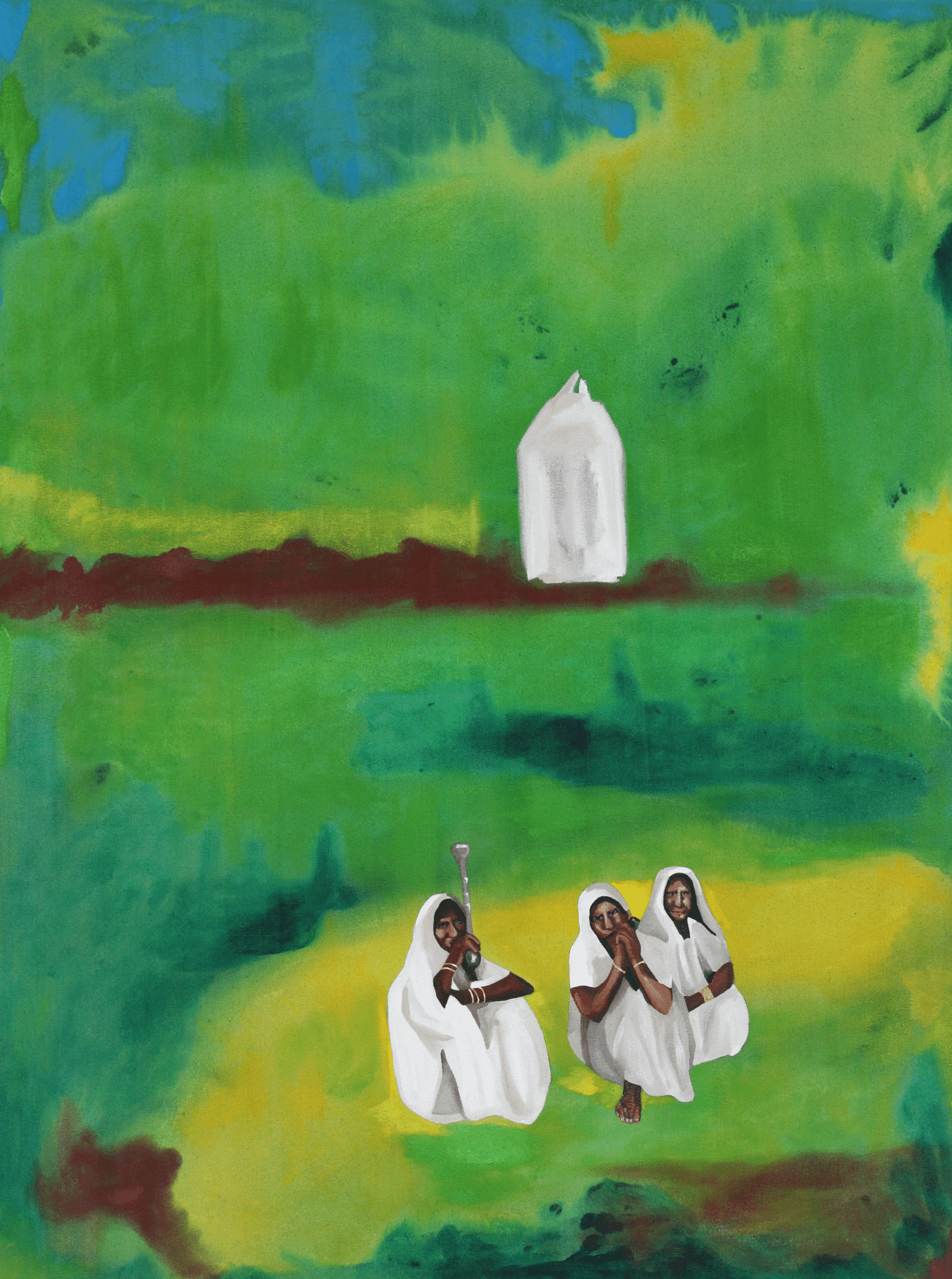
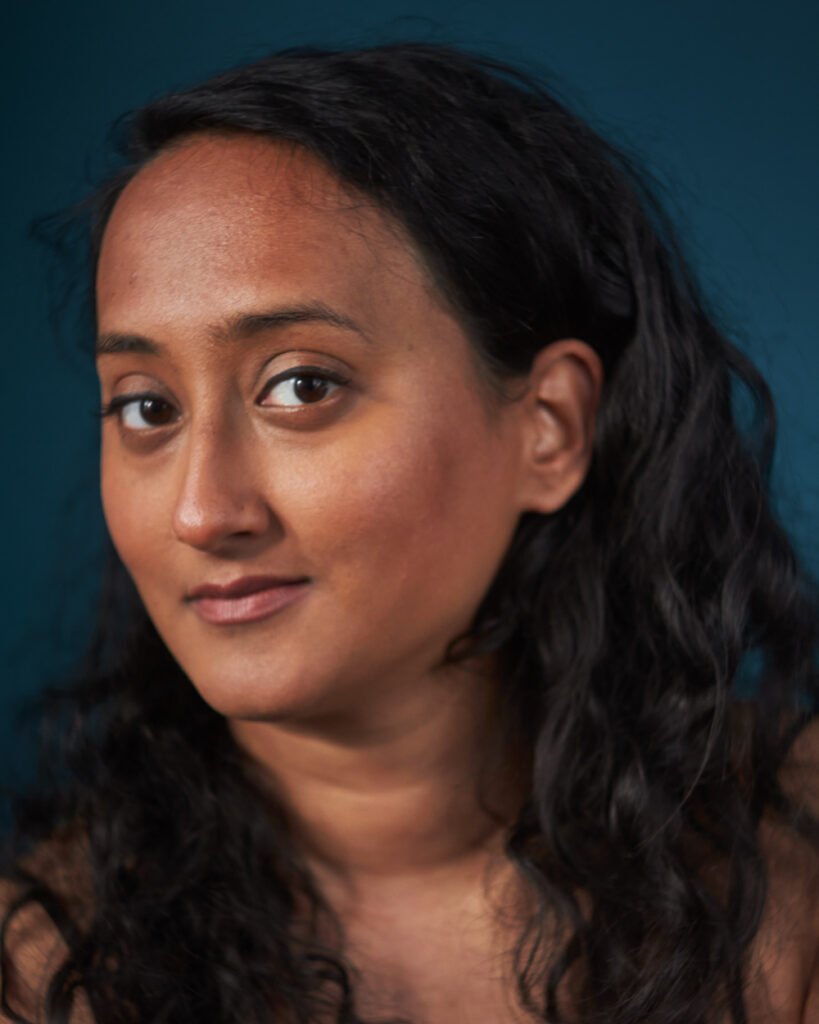
Sabrina Tirvengadum (b. 1984) is a deaf British Mauritian visual artist based in London, working across collage, digital illustration, generative AI, graphic design and photography. Her artistic practice explores her family history in Mauritius and reflects on the impacts of colonialism, diaspora, and archival absence. Through visual storytelling, she explores themes of identity, belonging, and intergenerational memory.
With a degree in Photographic Arts from the University of Westminster and a career in graphic design, Tirvengadum’s practice bridges personal experience with broader social histories. She is the founder of WAH (We’re all human), a platform that promotes inclusivity in digital spaces. Her art offers a vivid and honest portrait of what it means to reclaim presence, both for herself and for those historically left out of the frame.
Sabrina Tirvengadum takes a personal journey into identity, ancestry and the hidden histories that shape who we are. Inspired by their father’s life and family stories passed down through generations, They connect personal narratives with the larger history of Indian indentured labour in Mauritius. At its heart, it asks a universal question: How much of who we are comes from who they were?
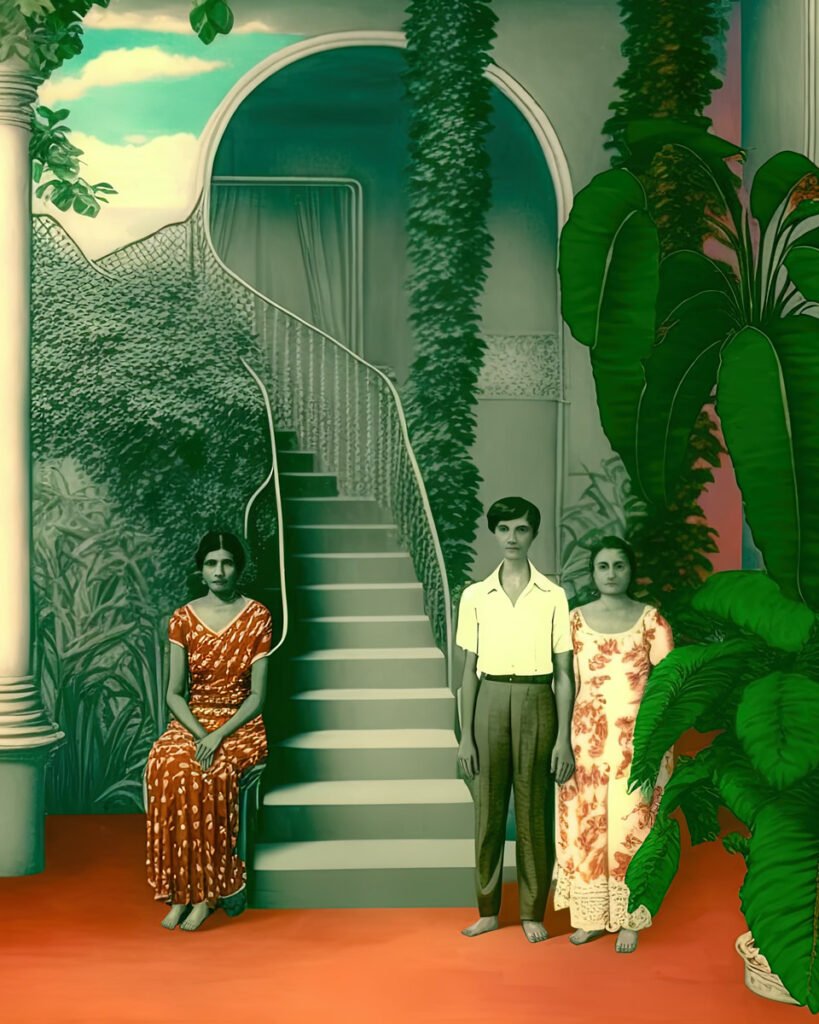
Using archival photographs, AI-generated imagery, digital art and film. Sabrina blends personal and collective memories to reimagine moments that were lost, hidden or never existed. This approach shows the nature of how memory works, mixing truth, interpretation and imagination.
A key part of this journey is the artist’s DNA link to the Marrier d’Unienville family: wealthy plantation owners who employed their great-grandmother as a maid. This discovery led to a deep exploration of privilege, labour, and lineage, which are central to the artwork ‘If We Were Marrier d’Unienville’ through imagining alternative histories, this work invites us to think about the complex connections between ancestry, power and resilience.
Film: A souvenir to keep
Another highlight is the short film ‘A Souvenir to Keep’ made from rediscovered family footage of the artist’s first visit to Mauritius in 1993. The film captures the emotional experience of connecting with ancestral land and reflects the shared journeys of many people in diaspora communities, where longing and belonging intertwine.
Who Were They? Who Am I? is more than a question. It invites us to explore how history, family, and storytelling shape identity. By reimagining the stories of the past, Sabrina honours those who came before and asks us to reflect on our own connections to history and heritage.
Exhibitions
2026: Beauty Fall, SPACE Gallery
2026: If we were Marrier D’Unienville, House of European History
2025: P A R A L L E L, Devonshire Square
2025: Frieze East End Day
2025 – 2026: I Still Dream of Lost Vocabularies, Autograph
2025: Who Were They? Who Am I?, Attenborough arts centre, Leicester
2024: Accessible Lines, Online Exhibition
2024: Interwoven, BLOC Gallery, Queen Mary University of London
2023 – 2024: Afternoon Chai, Billboard, SPACE Gallery, Ilford, London
2023: Future Focus: New Terrain @ Parallel London, Devonshire Square
2023: Loosen Art – The Family, Roma
2023: If we were Marrier d’Unienville, Runner up, Visible Artist Award, House of St Barnabas and Audible Head office
2023: Lafami (Mauritius), NAE OPEN 2023, New Art Exchange
2023: If we were Marrier d’Unienville, Becoming Monumental, Autograph, Becoming Monumental at Old Street, outdoor display, As part of Autograph’s exhibition, YOU NAME IT by Sasha Huber
2023: If we were Marrier d’Unienville, Becoming Monumental, Autograph, Online Exhibition As part of Autograph’s exhibition, YOU NAME IT by Sasha Huber
2023: My Fiancé – After he proposed, Small File Photo Festival, Photography Unthinking, Online Exhibition
2023: My Fiancé – After he proposed, Shortlisted, Small File Photo Festival, The Photographers’ Gallery
2023: If we were Marrier d’Unienville, New Year Exhibition, The Print House Gallery
2021: HomeMade Film screening with Leytonstone Loves Film + Barbican
2021: RyeHereRyeNow Poster Exhibition with London Design Festival
2021: Wiilma’s ‘Create and Connect Safely from Home’ Exhibition supported by Barbican’s Leytonstone Loves Film Festival
2020: #HomeIs Online screening, Waltham Forest London Borough of Culture 2019 and Barbican
2009: exhibited photography project “Behind closed eyes” at the Leytonstone Art Trail, London
2007: Photography exhibition “Behind closed eyes”, Free Range, The Truman Brewery, London
2006: Touch Exhibition “Dead Celebrities”, Polish Cultural Institute, London
2006: Photography exhibition “Focus on Guangzhou” Guangdong Museum of Art, China
2006: Exhibition “Focus on Guangzhou” in London Gallery West
Press
2025: Signing my skin colour, Wellcome Collection
2025: Journal of Indentureship and its Legacies, Pluto Journals
2025: Guest Editor, Design Can
2024: Artist Highlight, Ameena Gafoor Institute
2023: Envisaging Genealogies and Disability Justice, Sabrina Tirvengadum x Bindi Vora, Autograph
2023: The top 5 art exhibitions to see in London in November, Tabish Khan, FAD Magazine
2023: Her eyes, Journal, Shades of Noir
2023: Studio Highlights, SPACE Studios
2022: Article, Andrew Brown: Entangled Ilford, SPACE Studios
2022: Interview, Make Bank
2022: Art commission, NYM magazine
2021: Interview, Creative Entrepreneur
2020: article, audio and illustration, Dating: Mixed Signals, dubble magazine
2020: Questions for the future LION x WeTransfer