
-
Our 1st exhibition
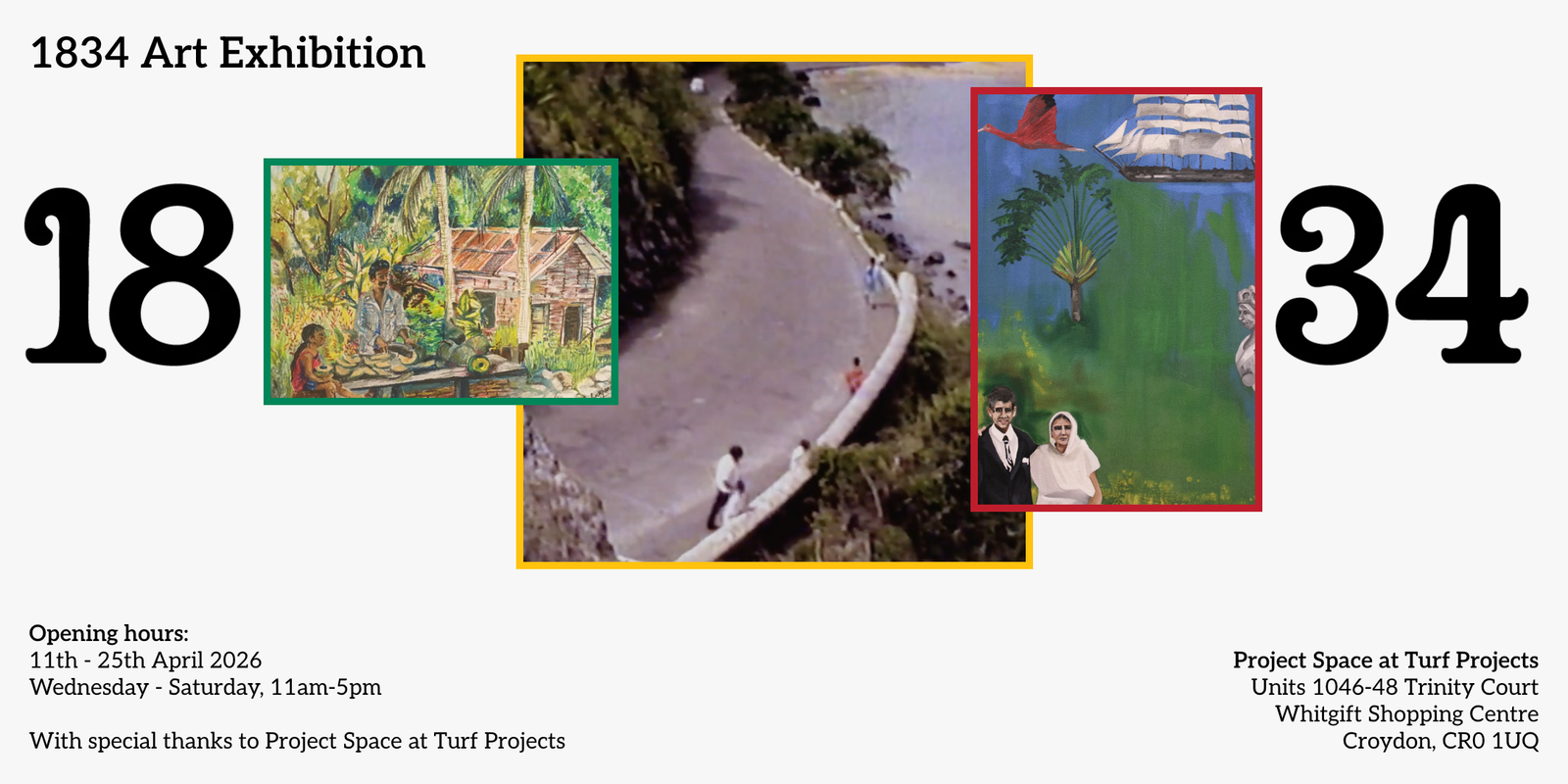
1834 Collective is pleased to present: 1834, the debut exhibition at Turf Project Space. The exhibition title is taken from the year that Indian Indentureship was first recorded as beginning. This new colonial enterprise resulted in 1.6 million Indians being indentured to European colonies as a replacement following the abolition of slavery. This exhibition brings
1834 Artists
-
Liesa Bacchus
Liesa Bacchus (b. 1988) is a British painter of Indo-Caribbean heritage, whose parents hail from Trinidad and Guyana. Liesa’s practice is an exploration of…
-
Sabrina Tirvengadum
Sabrina Tirvengadum (b. 1984) is a deaf British Mauritian visual artist based in London, working across collage, digital illustration, generative AI, graphic design and…
-
Salina Jane
Salina Jane is an artist, illustrator and printmaker living and working in Croydon/London. Born and brought up in London to Indo-Caribbean, parents from Guyana.…
-
Support our collection
We didn’t want to miss an opportunity for you to support us in funding our planned exhibition and projects Purchasing Sabrina’s Afternoon Chai prints…
Proudly powered by
An interdisciplinary art collective exploring the global histories and contemporary echoes of
Indian Indentureship.
The year 1834 marks a pivotal shift
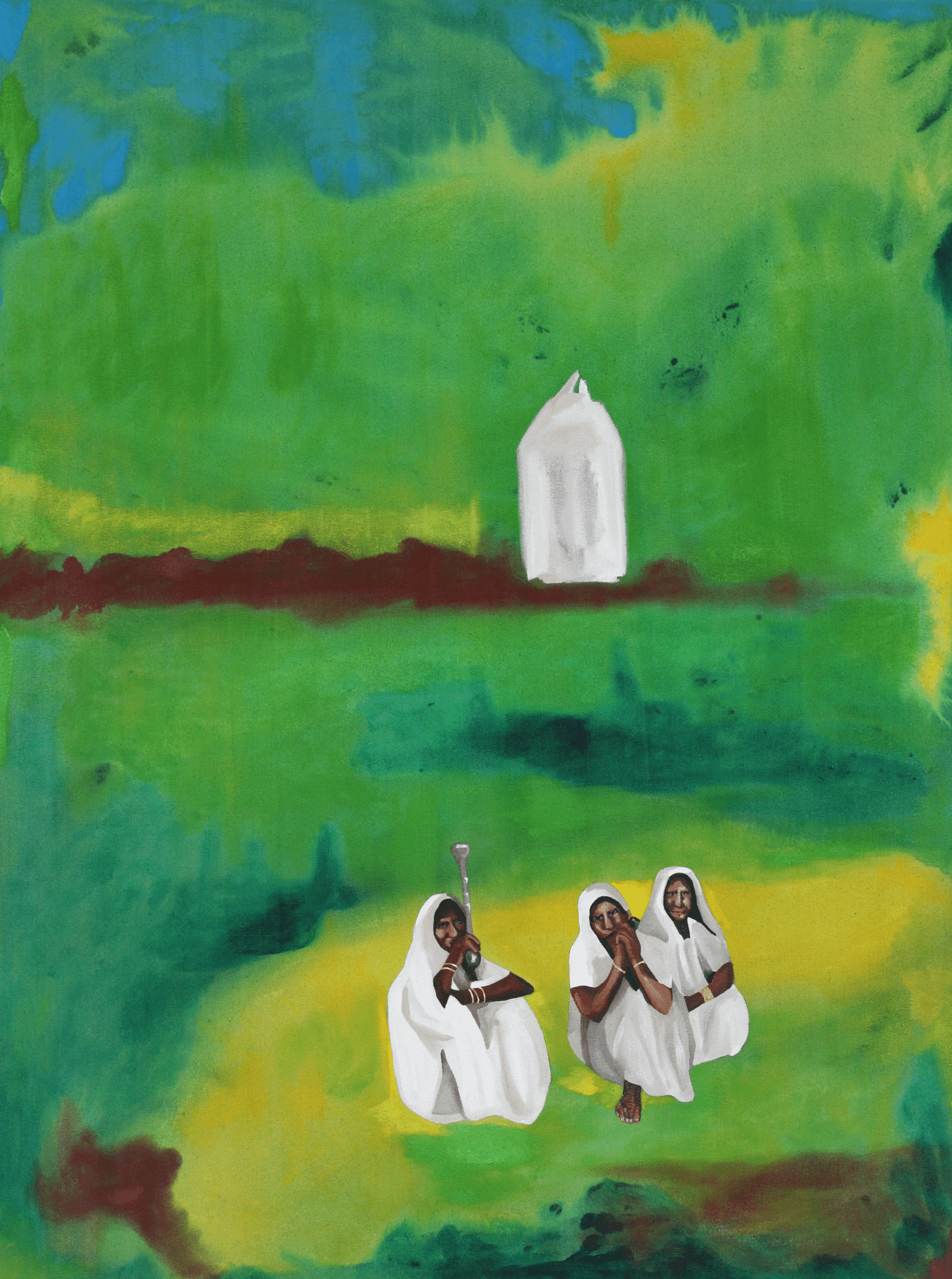
The end of slavery in the British Empire and the beginning of the Indian indenture system, a transition that reshaped the lives, families and cultures of our ancestors across oceans.
As a collective, we create space for these histories to be seen, felt, and carried forward. Our work is not academic it is personal, intuitive, and deeply rooted in ancestral memories. Through painting, photography, performance, storytelling and research shaped by curiosity rather than institutions, we follow the overlooked narratives.
An indenture is a work contract that ties a labourer to an employer for a set number of years. This kind of agreement has existed in many places throughout history. But from the 16th century onwards, as European countries expanded their colonies, indenture grew into a much larger and more widespread system.
People were recruited to work far from home and sent on long sea journeys that many never returned from. They were often promised land or a better life after their contract ended, but these promises were rarely kept.
Our aim is to honour ancestral resilience, reconnect with what was silenced and open new conversations about identity, belonging, and the ongoing legacies of indenture in our communities today.
Affected Countries
Australia, Barbados, China, Cuba, Fiji, Grenada, Guadeloupe, Guyana, India, Indonesia, Ireland, Jamaica, Kenya, Kiribati, Malaysia, Martinique, Mauritius, Peru, Portugal, Réunion, Samoa, Singapore, Solomon Islands, South Africa, Sri Lanka, St Lucia, Suriname, Tanzania, Thailand, Trinidad and Tobago, Tuvalu, Uganda, United Kingdom, United States, Vanuatu.